Humphrey Prideaux: The Deist Controversy
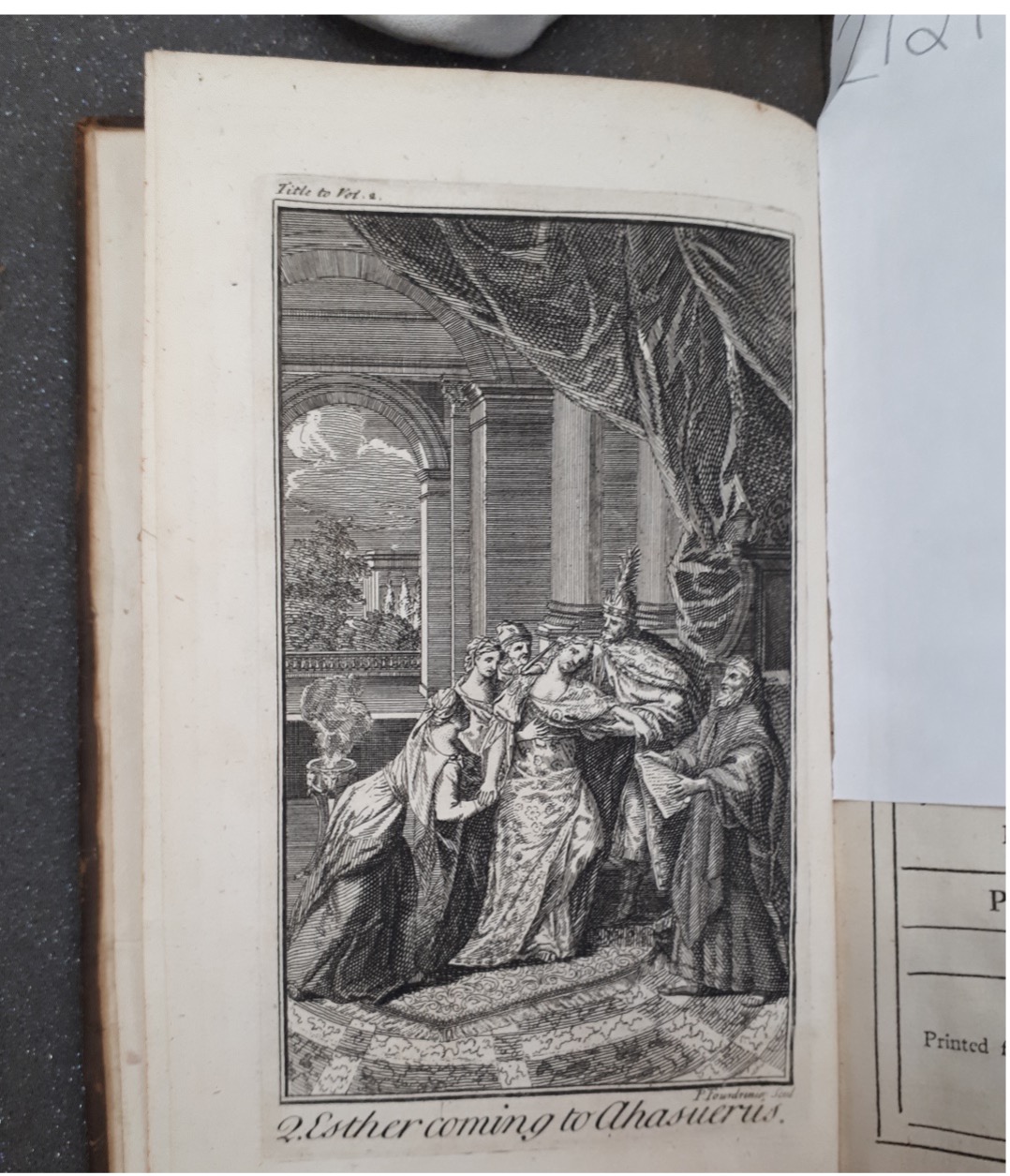
Feild’s antiquarian interests extend to the biblical past, as attested by his copy of Humphrey Prideaux’s The Old and New Testament in the History of the Jews and Neighbouring Nations (London: R. Knaplock and J. Tonson, 1725). A notable classical scholar, Prideaux (1648-1724) was best known for his studies on ancient sculptures and his Hebrew translations. In 1679, he was appointed Busby’s Hebrew lecturer in Christ Church, Oxford. Heneage Finch (1620-1682), the Lord Chancellor, acted as Prideaux’s patron for his writings on the Arundel Marbles, a collection of Greek marble sculptures collected by the Earl Arundel (Brown 1).
As part of his Hebrew and classical learning, Prideaux looked further into biblical narratives from a historical perspective, instead of a philosophical or theological stance. A Letter to Deists: Showing that the Gospel of Jesus Christ is no Imposture; but the Sacred Truth of God, written in 1696, contested the deists’ belief that Jesus Christ was a mortal man and not the divine son of God. Prideaux compared Christ’s and Muhammed’s histories to demonstrate how Jesus lived a divine life, while the Muslim prophet existed as a physical man. Stuart Brown points out that Prideaux used his knowledge of Hebrew, canon law, and biblical history for “religious propaganda” (1).
Prideaux’s main purpose in The Old and New Testament was to dismantle the deist controversies surrounding the celebration of Easter and the Jewish cycle of eight-four years. He argued that deists and modern skeptics revived these controversies because of their disbelief that certain events had taken place. For instance, Prideaux pointed out how some writers doubted that Christ resurrected during Easter and that the apostles were correct in claiming that Jesus was divine. He counteracted their views by reexamining Israel’s establishment of a flourishing kingdom in the intertestamental period between the creation of the Old Testament reportedly around 165 BCE and that of the New Testament in the first century CE. Prideaux classified his text as an “Epilogue to the Old Testament … as what after is to follow, will be a prologue to the New” (ii). He also contributed to scriptural exegesis by reinterpreting the history of the Jewish state and its influence on the development of the New Testament, with a focus on the Jewish state’s use of the lunar calendar. By establishing proper dates for Christianity’s rites based on the Jewish lunar calendar, Prideaux dismissed skeptics’ arguments by proving that Easter does take place in spring and correlates with what is written in the Bible. Similar to his contemporaries, Prideaux intended to protect the Christian roots of the Church of England by interpreting the biblical stories as historical narratives to prove that the original church of the apostles was the natural state of Christianity.
Feild’s inclusion of Prideaux’s writings in his collection suggests that the bishop wanted to learn more about the beginning of the Christian church. As a Tractarian, Feild would have been interested in examining how the Church of England derived its connections to the original, apostolic church. Prideaux provides an important interpretation of this historical connection, which fits into the Oxford Movement’s perceptions of the English church as the last bastion of traditional Christian worship.