Mullock and Alexander Bannerman
Thomas C. Harvey’s Official Reports of the Out Islands of the Bahamas has an interesting provenance. Harvey had been assistant surveyor general to the Bahamas when Alexander Bannerman had been governor of that colony (between 1854 and 1857, when he was appointed governor of Newfoundland). Harvey’s reports on the island, presented to Bannerman in 1856 and published in Nassau in 1858, describe infrastructure improvements that might be made on the islands, including investing in a steamship (which was an interest of Bishop Mullock’s).
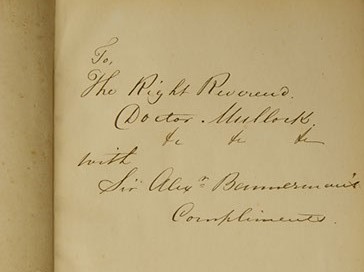
Bannerman’s and Mullock’s names are linked in Newfoundland history as advisories in the partisan and sectarian power struggles of the 1860s, making the governor’s inscription to the bishop in this copy of Harvey’s book a tantalizing hint of a friendly encounter. Conflict between the two men was likely; both Mullock and Bannerman had troubles with the legislature because of their confidence that they were right to lead the colony. Mullock had supported the Liberal party through pastoral letters and through allowing priests to campaign during elections, leading Tory Church of England critics to condemn his involvement. Mullock felt that he had as much right as any British subject living in Newfoundland to express his opinions on the development of the colony and a duty to tell Roman Catholics how to vote. Bannerman was a relative newcomer, and, in principle, as representative of the crown he was independent. In practice, however, he dismissed the Liberal government without legal grounds and acted in ways that favoured the Tory party in the resulting 1861 election.
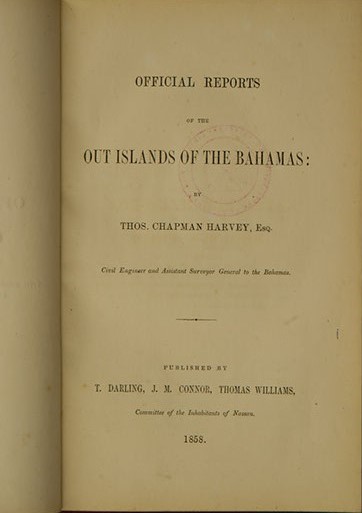
Despite the religious bigotry in some of the press, and the harsh rhetoric during election campaigns, daily relations between Protestant and Roman Catholic Newfoundlanders were often friendly and co-operative. Harvey’s Official Reports of the Out Islands of the Bahamas is an artifact that was once held in the hands of Bannerman and Mullock and a reminder that personal relationships were sometimes warmer than public conflict might indicate.