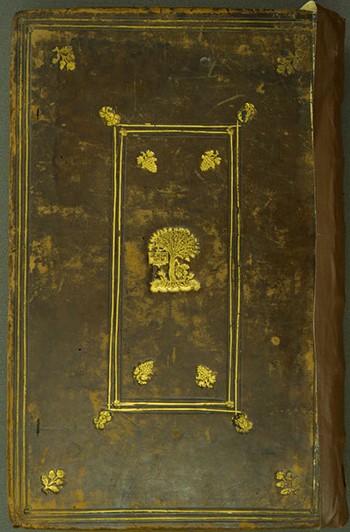
Greek Classics: Homer's Works
This edition of the complete works of Homer in the Mullock collection includes the ancient Greek poet's two epic poems, the Ilias (Iliad) and the Odyssea (Odyssey), as well as other works which were ascribed to Homer in the past but which modern scholars no longer accept as genuinely Homeric. These latter works include the mock-epic Batrachomyomachia (Battle of the frogs and the mice), the Hymni (Homeric hymns) (poems in honour of ancient Greek gods composed in different time periods), and other shorter works such as epigrams, Poëmatia. Homer was often judged to be the greatest poet to have ever lived as well as a font of ethical wisdom, and, for that reason, his works were considered an essential item in the library of any educated person. His Ilias tells the story of the war between the Greeks and the Trojans, while his Odyssea tells the story of the Greek hero Odysseus's difficult return to his home island of Ithaca after the conclusion of the war. This edition also includes a full Latin translation of Homer's works, which would have been useful to an educated reader who, as was common in Bishop Mullock's day, could read Latin with reasonable fluency, but who found ancient Greek more challenging
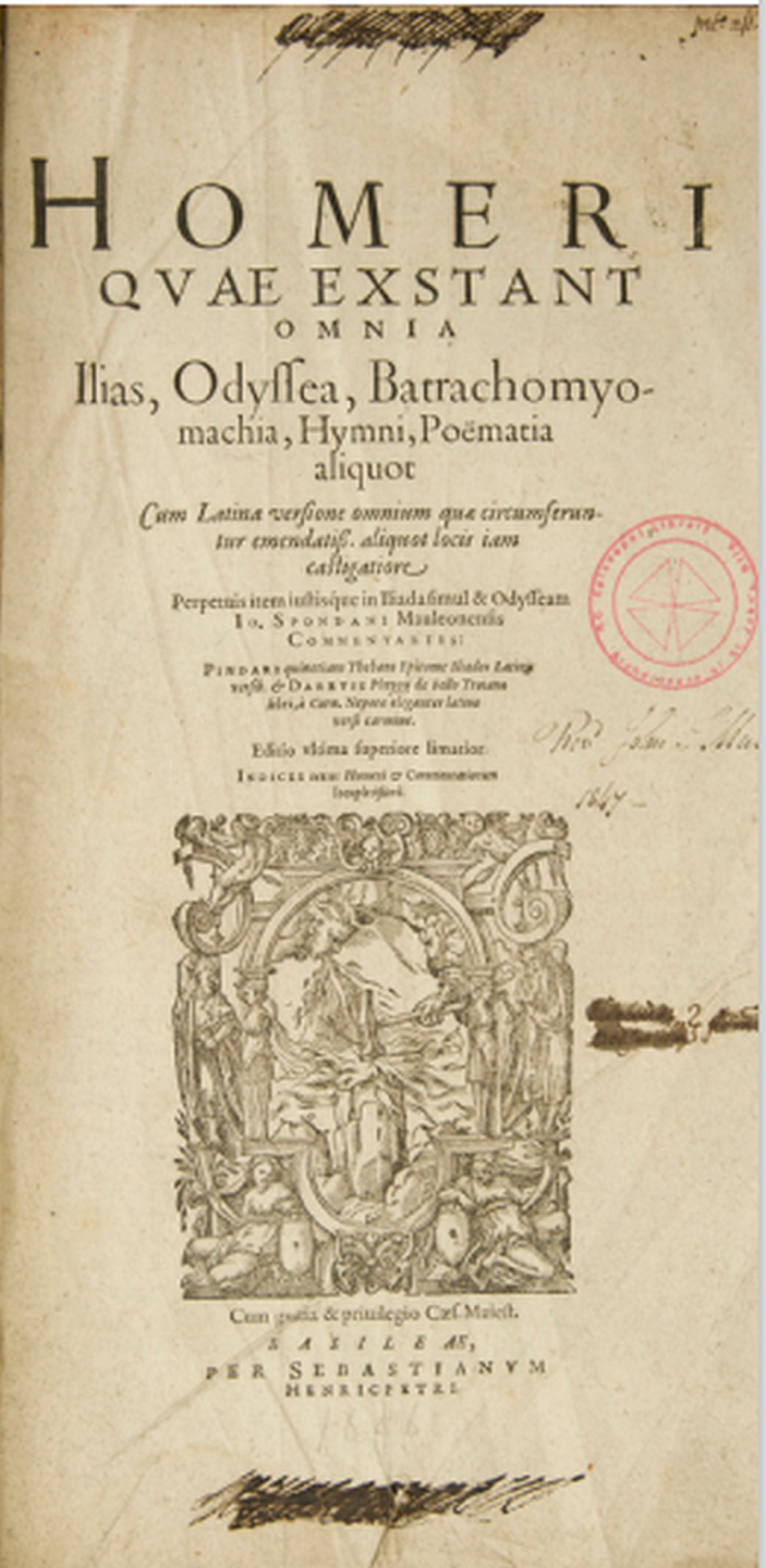
It was also common to include learned commentary beneath the text in order to enrich the understanding of the work and aid the student: the commentary of this edition (first published in 1583) is that of Jean de Sponde of Mauléon (1557–95), a poet and scholar from the Basque region of France who was connected with the court of Henry IV of Navarre and who came from a Protestant background but later converted to Catholicism. The frontispiece advertises that the book additionally contains the summary of the Ilias in Latin verse produced by “Pindar the Theban,” as well as the Trojan War by “Dares the Phrygian”; the latter was supposedly translated into Latin by the first-century BCE Roman author Cornelius Nepos.
Both of these works, however, should be seen as fictions or playful forgeries. Dares the Phrygian is the name of a Trojan priest mentioned in Homer's Ilias. This fictional work, surely not translated by Cornelius Nepos but composed by an unknown author in the fifth century CE, is thus purported to be an eyewitness, pro-Trojan account of the Trojan War. There was an ancient Greek poet from Thebes named Pindar, but the real Pindar certainly did not write a summary of the Ilias, much less in Latin verse. In both cases, the work is ascribed to a well-known author or unimpeachable eyewitness in order to increase its authority and/or romantic appeal. Such epitomes had been popular since the Middle Ages and would have been considered useful supplements to the Homeric narrative.
The edition of Homer's works in the Mullock collection was printed in Basel by Sebastian Henric Petri (1546–1627), who ran a printing house along with his father Henric Petri (1508–79). The edition contains a 1606 dedicatory letter from the commentator Jean de Sponde to Henry IV of Navarre as well as a 1583 dedicatory letter from the same to Henry III. Mullock obtained his copy of Homer while he was touring in Italy in 1857 and awaiting consecration as bishop.