Michael Francis Howley Collection
Michael Howley was one of the few Catholic archbishops of St. John’s (five out of sixteen), who was born in Newfoundland and whose book collection is still extant today. Born on 25 September 1843, he was one of many in his family to become a prominent member of the community. His father Richard Howley was an Irish immigrant who found success as a merchant and later married Eliza Burke, who gave birth to Howley, as well as his two brothers and three sisters. It was not just Michael Howley who would gain fame in Newfoundland society: James would go on to become a government geologist and historian of the Beothuks, while Thomas became Chief Health Officer and the district surgeon of St. John’s East. Howley received a sound Catholic education, first at the Roman Catholic Academy, and once he turned thirteen at the newly established St. Bonaventure’s College, where he was one of the first students. In 1863 at age twenty, he left Newfoundland to study for the priesthood at the Urban College of the Sacred Congregation of Propaganda (Pontificio Collegio Urbano de Propaganda Fide) in Rome, Italy. Ordained a priest in June 1868 in the Basilica di San Giovanni in Laterano by Cardinal Constantino Patrizi Naro in Rome, Howley’s skills were immediately recognized, and he was appointed by Propaganda Fide to serve as secretary to the newly appointed apostolic administrator of Western Scotland, Charles Eyre (1878-1902). Howley remained in Scotland for fifteen months before returning to Rome with Eyre to attend the First Vatican Council (1869-1870). This council greatly impacted Howley’s thinking for the rest of his life. It was at this time that he received his doctoral degree from the Cardinal Prefect of Propaganda, and his fundamental conservative ideology cemented.
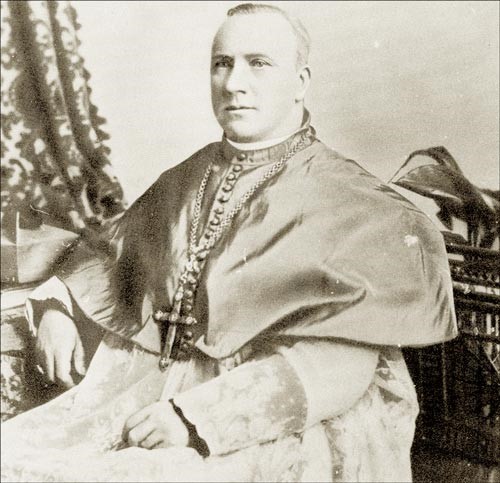
It was at this council that Howley met Thomas Joseph Power (1830-1893), who had recently been consecrated bishop of St. John’s. Knowing his heritage, Power asked Howley to return to Newfoundland to work with him in 1870. Over the next thirty-four years, Howley worked in many capacities throughout the province. In 1870, he served at the Cathedral of St. John the Baptist in St. John’s and aided Thomas Sears, the prefect apostolic of the town of St. George’s during the summer time. By 1876, he was appointed parish priest of Fortune Bay, where he was well liked by his diverse constituents because of his ability to speak French, English, and Gaelic. However, his time on the west coast was challenging: the area was remote, underdeveloped, and impoverished. Yet, this did not stop Howley: in St. George’s, he erected a convent and improved schooling conditions for local children. Howley was elected vicar apostolic and titular bishop of Amastris in 1892 and continued to work in St. George’s and St. John’s until 1904, when he became the first archbishop of the newly formed archdiocese of St. John’s.
Along with his role as archbishop, in which he served until his death in 1914, Howley was also an outspoken advocate for many provincial issues. During his time on the west coast of the island, Howley, like many other Newfoundlanders, vehemently opposed the fishing rights of fishermen from France, granted to them by the Treaty of Utrecht (1713), as he considered these advantages unjust to local fishermen. Howley got involved in all levels of government in an effort to change the fishing rights, even going as far as to request Pope Leo XIII to intervene in the matter. His political activism put considerable pressure on the British-led government in St. John’s and effectively displayed Howley’s power within the province.
Howley was not afraid to show this power either, frequently encouraging his constituents to take part in political action; he forbade Catholic fishermen from joining the Fisherman’s Protective Union, which ultimately led to the union’s collapse along the southern shore. Moreover, he got into personal conflict with British doctor Wilfred Thomason Grenfell even though they both worked for the same cause and strove to bring much needed support to the most underfunded areas in rural Newfoundland. However, Howley believed that Grenfell took advantage of these vulnerable people by showing Newfoundland in a bad light and exaggerating the poor living conditions in order to receive funding for his mission. Grenfell also frequently spoke of his own struggles living in Newfoundland. To Howley, these “complaints” showed a lack of loyalty to Grenfell’s missionary cause. Howley served twenty-two years as a bishop, including ten years as archbishop of the newly formed diocese of St. John’s, Newfoundland. After forty-six years of priesthood, Howley died on 15 October 1914 at age seventy-one.
Besides many of his civic initiatives, among them the creation of the Cabot Tower on Signal Hill, Howley was an ardent book collector. Howley’s books covering a broad spectrum of topics are housed in the Basilica Museum-Mullock Library in St. John’s, interspersed with the book collection of John Thomas Mullock (1807-1869), a former bishop of St. John’s. Howley’s books can be identified through his ownership marks: almost all of them are signed “+M.F. Howley,” with many also including a date, location, lender, or the episcopal stamp.
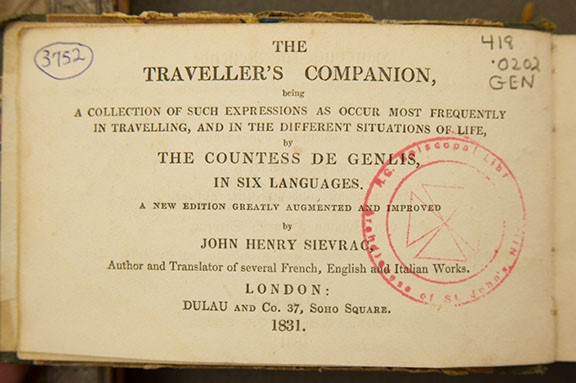
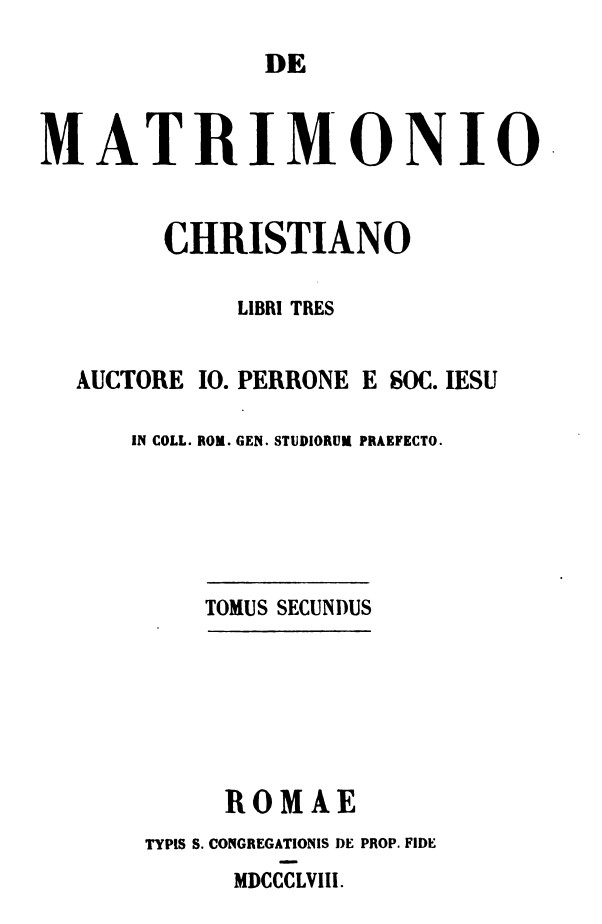
The most significant, proportionally speaking, is Howley’s collection of writings on Catholic pastoral and dogmatic theology and church history. His collection includes many notable ecclesiastical writers such as the scholastic theologian Thomas Aquinas (1225-1274), professor of theology Robert Bellarmine (1542-1621), and Dutch philosopher Guilielmus Estius (1542-1613). Howley’s set of Breviarium Romanum, a liturgical book containing prayers, psalms, readings, and hymns, was printed in 1893, and presumably came into his possession shortly after he was named titular bishop of Amastris. Howley also had a separate copy of Breviarium Romanum published in 1908, which was gifted to him from a M. Reardan on New Year’s Eve 1909. Inscriptions such as this one are very common in Howley’s library. Many of Howley’s theological books were published by, or about, the congregation and church he served in. For example, he owned a number of books published by his former seminary in Rome, the Propaganda Fide, a Catholic organization dedicated to missionary work and related activities all over the world.
While there are few records of Howley’s travels beyond Newfoundland, Rome, and Scotland, his library indeed tells of a desire to see the world. Alongside his religious texts, Howley possessed several Baedeker travel guides, a brand of German travel guides that was published for nearly one hundred years until 1950. Guidebooks of Palestine, Syria, Egypt, Western Europe, and several Mediterranean countries are paired with A Complete Practical Grammar of the German Language and Elementary Arabic: A Grammar, the latter of which is pointing to Howley’s potential missionary work for Propaganda Fide. Howley was interested in languages and spoke English, French, and Gaelic fluently, as well as Italian and Latin as a result of his studies in Rome. Along with his grammar books in German and Arabic, Howley also had several Hebrew lexicons and Hebrew bibles with Latin translations and commentaries (such as Biblia Hebraica ex Recensione Aug. Hahnii cum Vulgata Interpretatione Latina Denuo Edita). Unlike the German and Arabic grammar books, his Hebrew lexicons were not practical textbooks but were meant to aid the interpretation of biblical passages and his theological studies.
Aside from his books on Catholic theology, Howley also owned religious controversial literature. Although Catholicism was the dominant religion in Newfoundland during Howley’s tenure as archbishop, the Church of England was a close second, with the two faiths comprising over two-thirds of the population. The comparison between the two religions is an interest Howley shared with his predecessor, Bishop Mullock. One of Howley’s books, a 1847 copy of Thomas Ward’s The Errata of the Protestant Bible, examines errors found in English Protestant translations of the Scriptures. Howley also had Jaime Balmes’ 1844 work,El Protestantismo Comparado con el Catolicismo. En Sus Relaciones con la Civilización Europea,a comparative study of Protestantism and Catholicism, suggesting that Howley was eager to champion the interests of his constituents, the Catholic community of Newfoundland in every way possible.
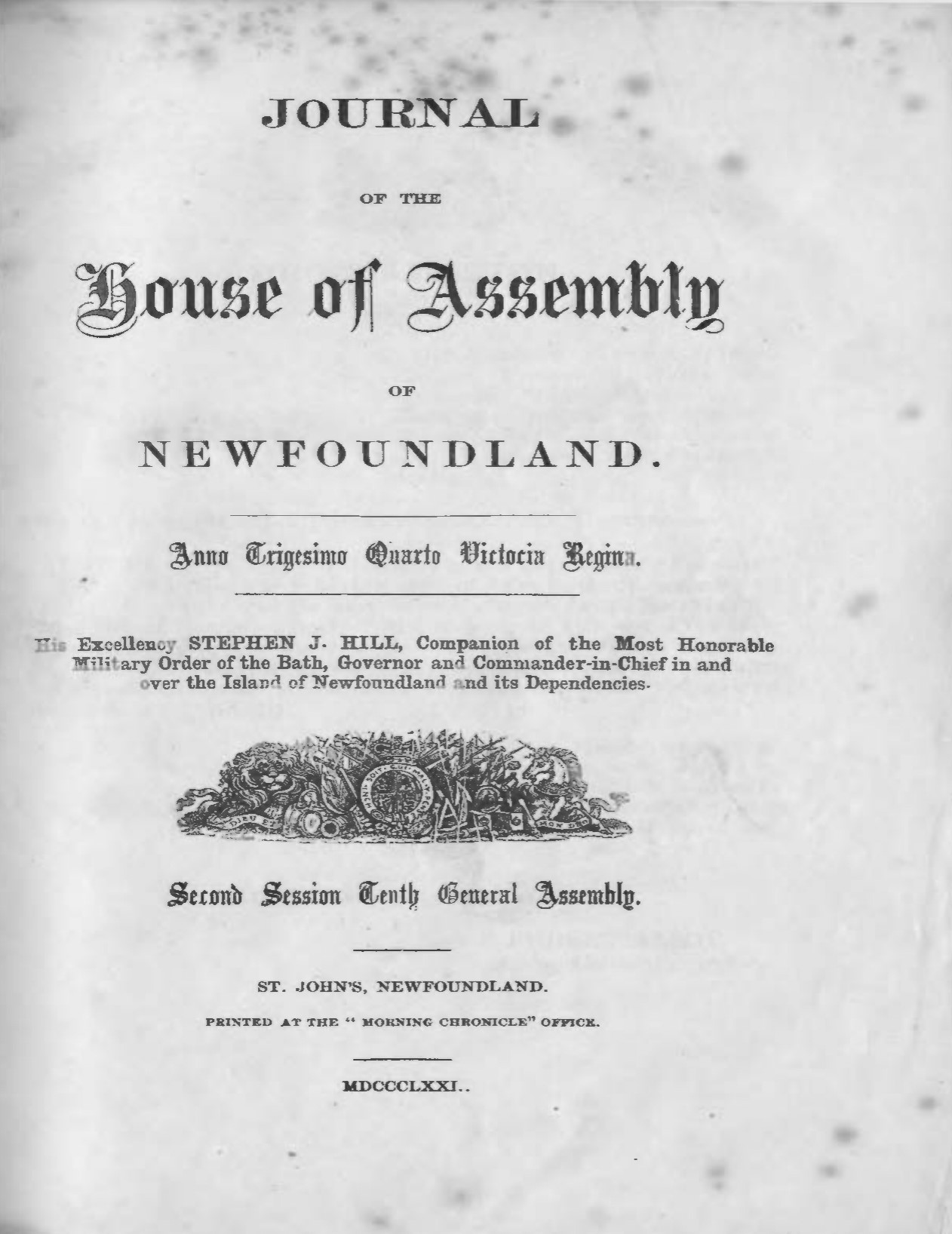
Furthermore, Howley’s dedication to his dioceses is easily seen through his actions, as well as his bookshelves. Not only does Howley have several Newfoundland House of Assembly journals, but as a staunch supporter of Confederation, he also collected governmental surveys from Canada. William Houston’s 1891 Documents Illustrative of the Canadian Constitution and Canada: Statistical Abstract and Record for the Year 1887 are among several documents that deal with issues connected to Canada, likely used to further his argument for Confederation. Howley was also in close contact with Canadian priests, receiving an 1892 copy of Jubilee Volume: The Archdiocese of Toronto and Archbishop Walsh with an Introduction by His Grace the Archbishop from Archbishop John Walsh (1888-1972) who dedicated the book to “His Lordship The…Rev. M. F. Howley…with affectionate esteem.” Close relationships with dioceses external to Newfoundland have long benefitted Howley; during his time in St. George’s, he was able to obtain help from the Sisters of Mercy in Rhode Island to build a new convent.
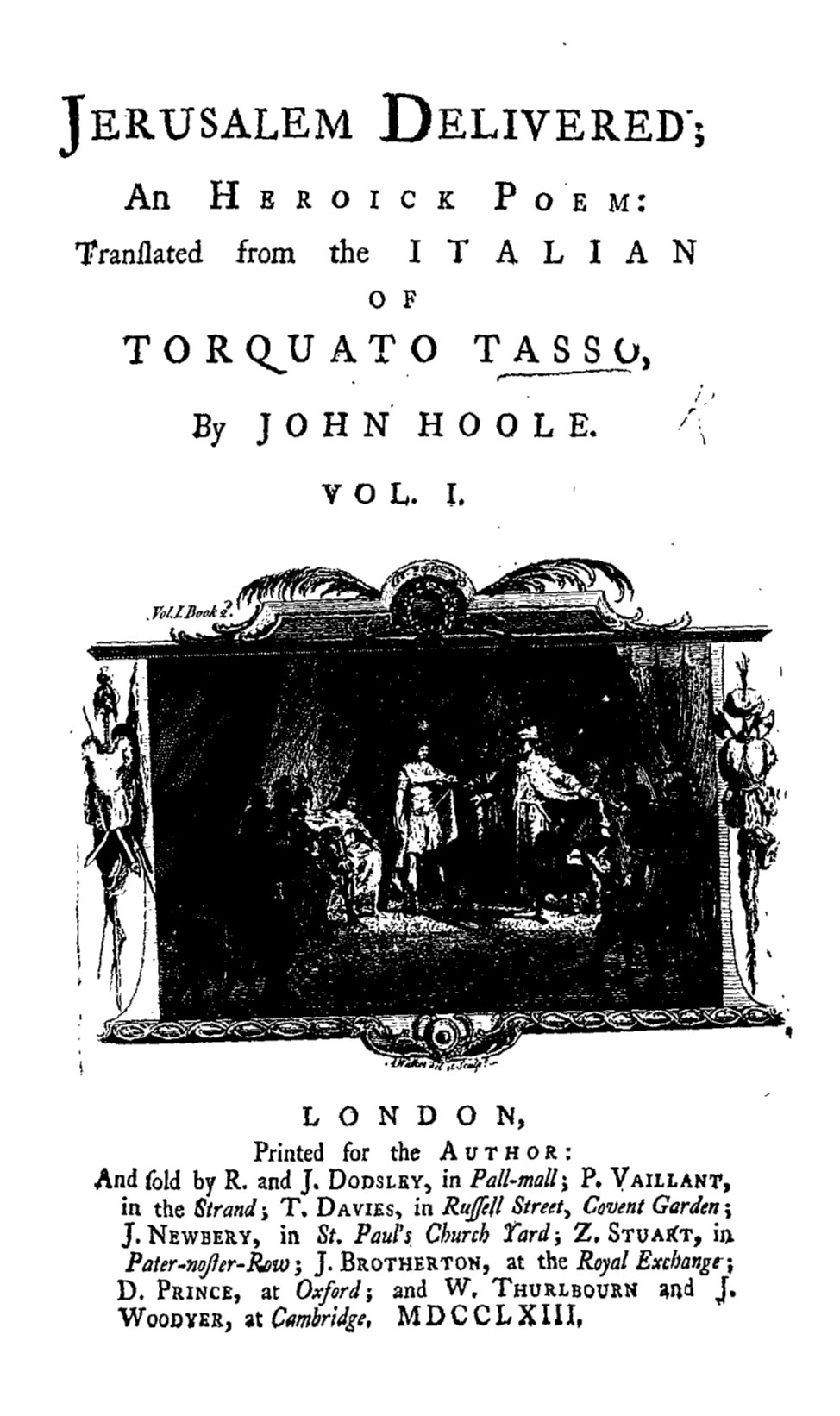
Poetry and drama are also represented in the Howley collection, genres often overlooked compared to the rest of the collection, yet nonetheless important. Editions of Dante, Homer, and Tasso sit alongside collections of poetry and operas. A copy of Aminta: A Modern Life Drama, written by Halifax archbishop Cornelius O’Brien, was gifted to his “dear friend Very Rev. Dr. Howley.” Howley also had his own works in his collection; An Explanation of the Holy Sacrifice of the Mass was published in 1894, and his 1903 Poems and Other Verses was gifted to and later returned by “M. Ignatius [of] St. Michael’s Convent Belveder[e].” This recipient is presumably Sister Mary Ignatius Guinane (d. 1910), a nun at St. Michael’s Convent in St. John’s, who was known for her travels to the United States to appeal for funds to create the Belvedere orphanage. This longstanding relationship with the convent likely helped Howley obtain support for his own foundations from the Sisters of Mercy in Rhode Island.
Poems and Other Verses was a collection of poems, songs and an operetta all written by Howley, as well as the translations of numerous odes and hymns. The majority of the works were written during Howley’s time at St. Bonaventure’s College and while studying for priesthood in Rome but were only published in 1903. The self-described “unpretentious little volume” of An Explanation of the Holy Sacrifice of the Mass is a more informative edition. Howley wrote the book with the intention of “the instruction and edification of Catholics [on]…the great central act of divine worship” and to “satisfy the curiosity…of non-Catholics.”
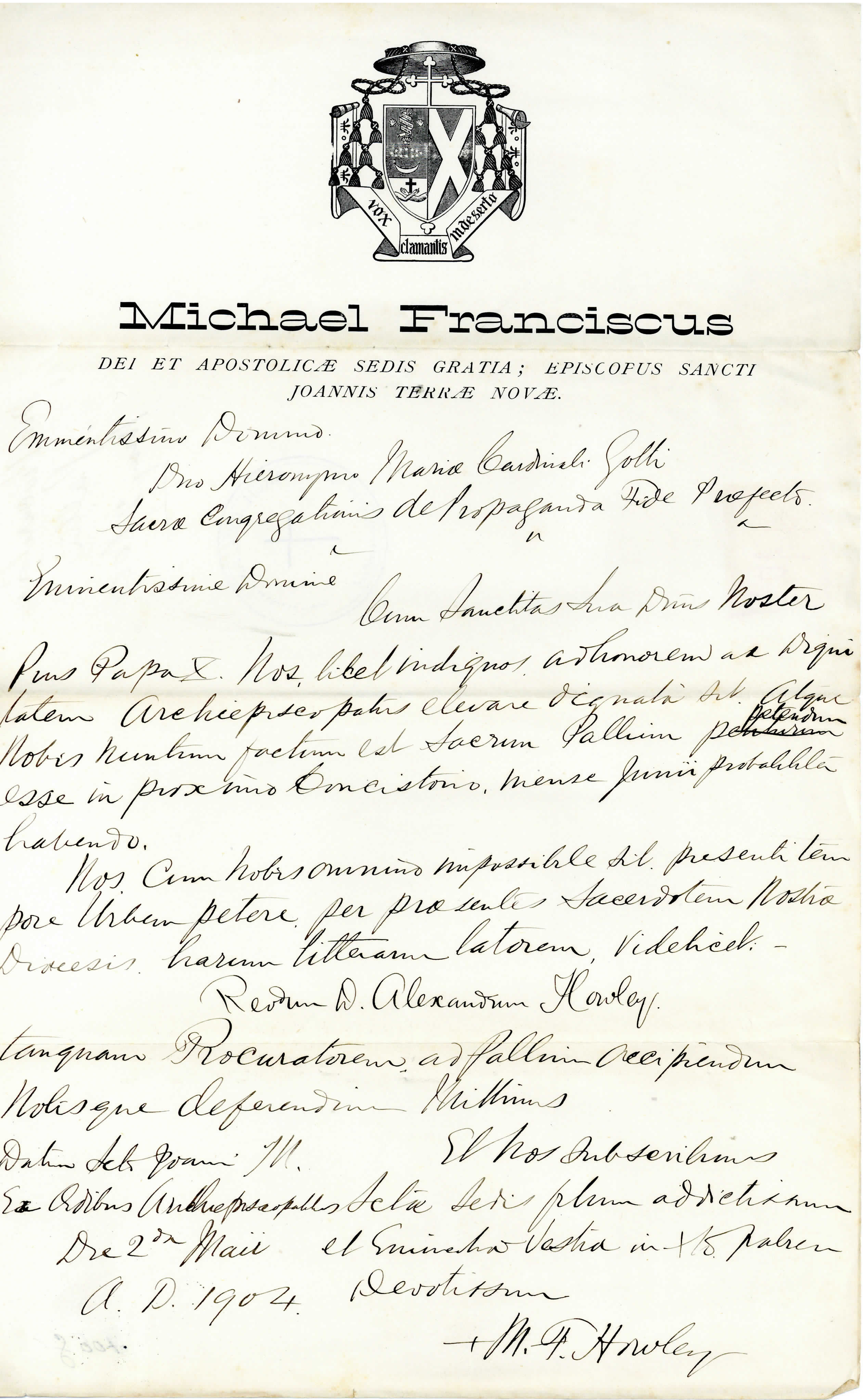
Michael Francis Howley was not only a prominent clergy member in a new diocese and an avid campaigner for change but also a well-educated book collector. His collection of books, still housed in its original setting in the Basilica Museum-Mullock Library, provides a unique source for Howley’s life and an invaluable resource for the history of Newfoundland in the late nineteenth and early twentieth century.