Edward Feild: Bishop of Newfoundland (1844-1876)
Edward Feild (1801-1876), Anglican bishop of Newfoundland from 1844 to 1876, attempted to change how Anglicanism was practiced on the island. Feild, who started his career as a theologian, with an education from Queen’s College, Oxford, earned a BA in 1823 and a MA in 1826 (Senior DCB). It was during his university years that Feild became acquainted with the Oxford and Cambridge Movements. The Oxford Movement was started by members of Oriel College, John Keble, Edward Bouverie Pusey, and John Henry Newman (1801-1890) in 1833 as a response to “British dissenters, Irish Catholics and Whig and Radical politicians” (Brown and Nockles 1) whom they believed wanted to control the Church of England. Members of the Oxford Movement, known as Tractarians after Newman published the Tract of Times, wanted to return the Church of England to those traditions established by the apostles and to restore the apostolic succession. During this time, the Cambridge Camden Society started its own religious movement, in 1839, with the intention of reestablishing Gothic architecture as the main aesthetic and religious style for churches. English theologians John Mason Neale (1818-1866) and Benjamin Webb (1819-1885) founded the Society to centre worship within the church and bring back medieval, religious practices (Webster 1).
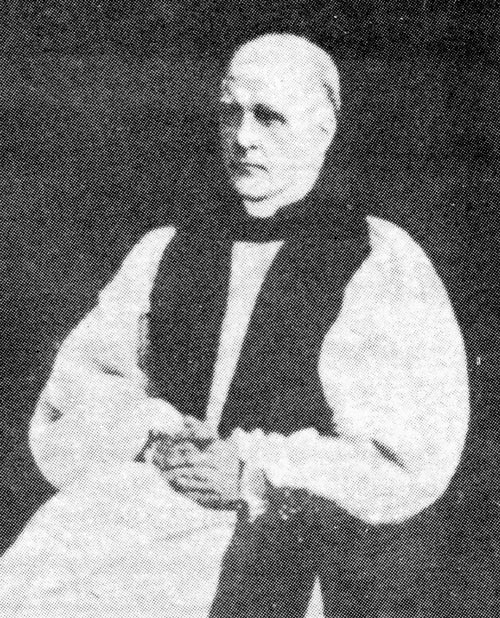
The Oxford and Cambridge Movements influenced how Feild regarded theology and the Church of England’s place in society. He was directly connected to Tractarianism, as he personally knew Keble and he was also taught by Charles Lloyd (1784-1829), a professor of divinity who taught the other founders. At the same time, Feild believed in the Cambridge Camden Society’s values, as he considered that the two Movements complemented one another. Feild stressed the importance of hierarchy whereby the clergy would lead the church without state interference, a belief he zealously applied while in Newfoundland.
The Colonial Bishops Council appointed Feild as Newfoundland’s and Bermuda’s Anglican bishop because he had established a schooling system in Kidlington, England (Senior 1). Upon his arrival in Newfoundland in 1844, Feild campaigned to change Anglican worship from Evangelicalism toward Tractarianism. He established Gothic churches, made these the only acceptable places to worship, and ensured that the clergy were present for devotional practices, like sermons, and rites, such as baptisms (Sanderson 45). Even though locals resisted these changes, such as Harbour Buffet’s residents protesting against the bishop from 1847 (Hollett 19), Feild continued to shape Newfoundland’s Protestantism. He developed the St. John’s Theological Institute, established by the former Bishop Spencer, into Queen’s College, where he planned to train students and recently arriving missionaries in the tenets Tractarianism (Senior 1). He hoped to educate a group of clergy who would support his efforts to return Newfoundland’s Anglican faith to the early apostolic precepts. As part of their training, Feild expected his students to immerse themselves in subjects related to the theology of the Church of England and writings that supported Tractarianism.
Most scholars who have discussed Feild’s life have focused on his influence on Newfoundland’s Anglican faith from a political, social, and religious perspective. For instance, Frederick Jones examined the major religious and political unrest that occurred in Newfoundland from 1860 to 1862, in which Catholic bishop John Thomas Mullock (1807-1869) and Feild supported opposing candidates based on their religious affiliation (Jones 1974). Jones argued that Mullock’s and Feild’s endorsements turned the election dispute into a sectarian conflict, which eventually ended both bishops’ interference in future political processes.
As Bishop Mullock’s contemporary and political rival, Edward Feild similarly donated his own books to the Theological Institute. Feild started the Queen College’s book collection by offering at least 52 books from his private library; these books are currently stored in the Rare Books and Special Collections of Memorial University’s Queen Elizabeth II library as a part of the Queen’s Collection. They constitute an invaluable primary source for reconstructing Feild’s intellectual background and assessing his broader impact on the cultural life of the island in the second part of the nineteenth century.
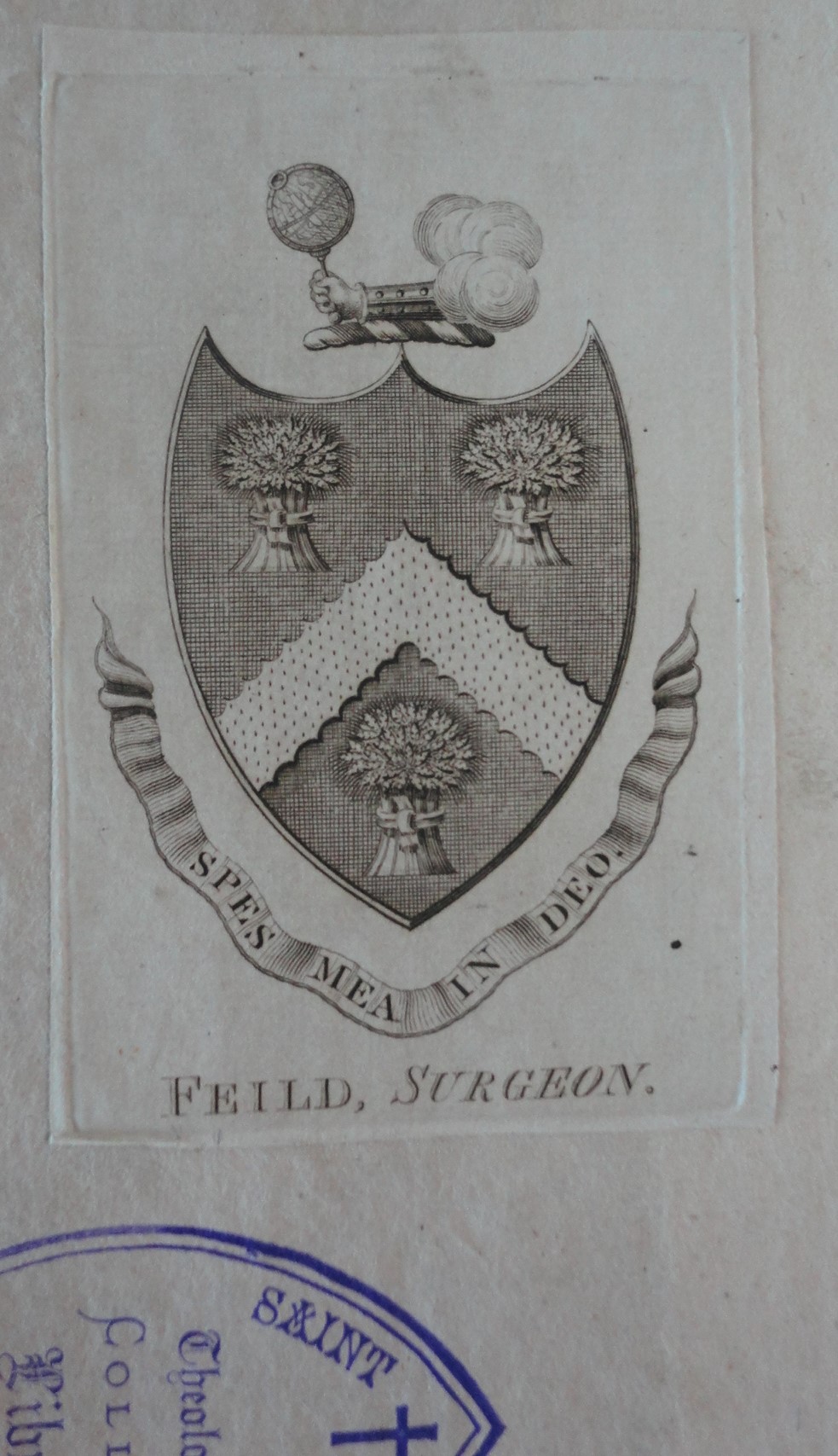
Feild’s book collection and his founding of the library collection thus form an integral part of his broader educational and religious reforms. This collection can be grouped into two thematic categories: the first consists of texts that focus on the Church of England’s theological position within English society. The authors of these books maintain that if the Church of England was to survive after the Protestant Reformation, it needed to return to the Scriptures to ensure its primacy as the universal church for all of Christianity and to protect the clergy’s apostolic succession. The second group, of antiquarian and historical studies, examines the English monarchy’s impact on the Church of England’s development and the relationship between church and state. In particular, Feild collected books that examined how the English monarchy balanced its dual role as head of the state and the Church of England. Much like the theological and philosophical works that Feild owned, these texts detail the problems that ensue when state and church are joined. Feild’s books reflect his Tractarian beliefs and unfailing conviction of the primacy of the Church of England as the sole heir to apostolic succession and the main Christian institution during the nineteenth century.